
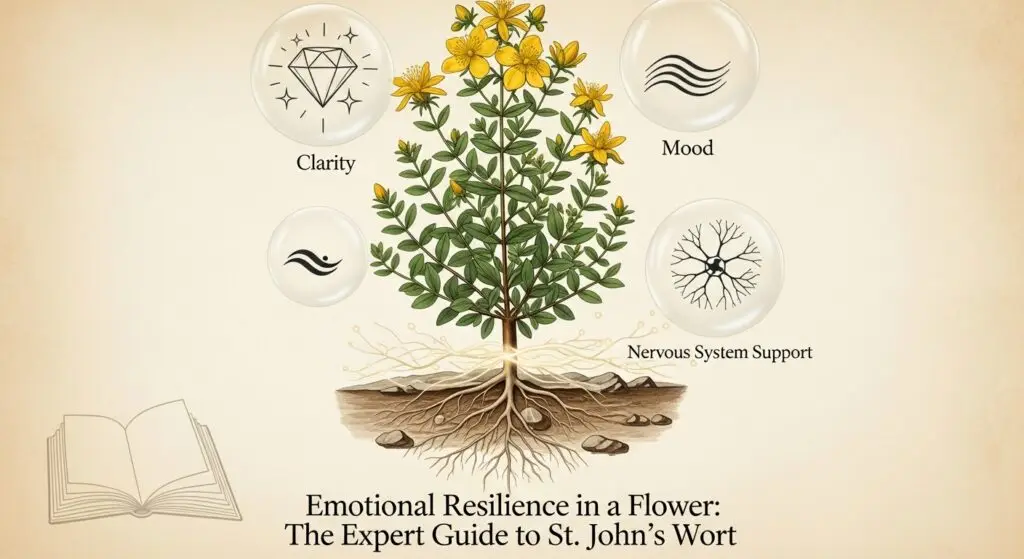
Feeling a little blah lately? Maybe the gray skies are overstaying their welcome or you’re just tired of the “meh” mood that sneaks up on you. Before you reach for another triple-shot espresso or doom-scroll through Instagram, let’s talk about an herb that’s been soothing souls for centuries:
St. John’s Wort (aka Hypericum perforatum).
This cheerful yellow flower has been called “sunshine in a capsule”—and trust us, it has some serious street cred. Used for over 2,000 years, it’s now backed by modern science for its effect on mood, stress, and more.
So let’s dig in, what is it, what does the science say, how do you take it, and most importantly… is it right for you?
Have you ever experienced that dull hum of mental exhaustion, the creeping irritability, the sense that your nervous system is two espresso shots away from full revolt? Whether you’re navigating burnout, low moods, or just feeling like your spirit’s Wi-Fi signal is weak, you’re not alone, and you’re not broken.
Life doesn’t always hand us lemons — sometimes it just hands us fog.
Enter: St. John’s Wort, a flowering herb with a 2,000-year legacy and modern scientific backing. Known historically as the “sunshine herb,” this plant may be one of the most researched natural antidepressants on the planet and yet, many still overlook it in favor of flashier trends or synthetic solutions.
In this guide, we’ll explore how St. John’s Wort works (neurologically and energetically), what the latest research says, who it’s for, and why it might just be your best-kept herbal ally for emotional clarity, mood resilience, and nervous system support.
Whether you’re a high-performer seeking balance, a spiritual seeker exploring plant medicine, or simply someone who wants to feel more like yourself again — this post is for you.
What Is St. John’s Wort, Anyway?
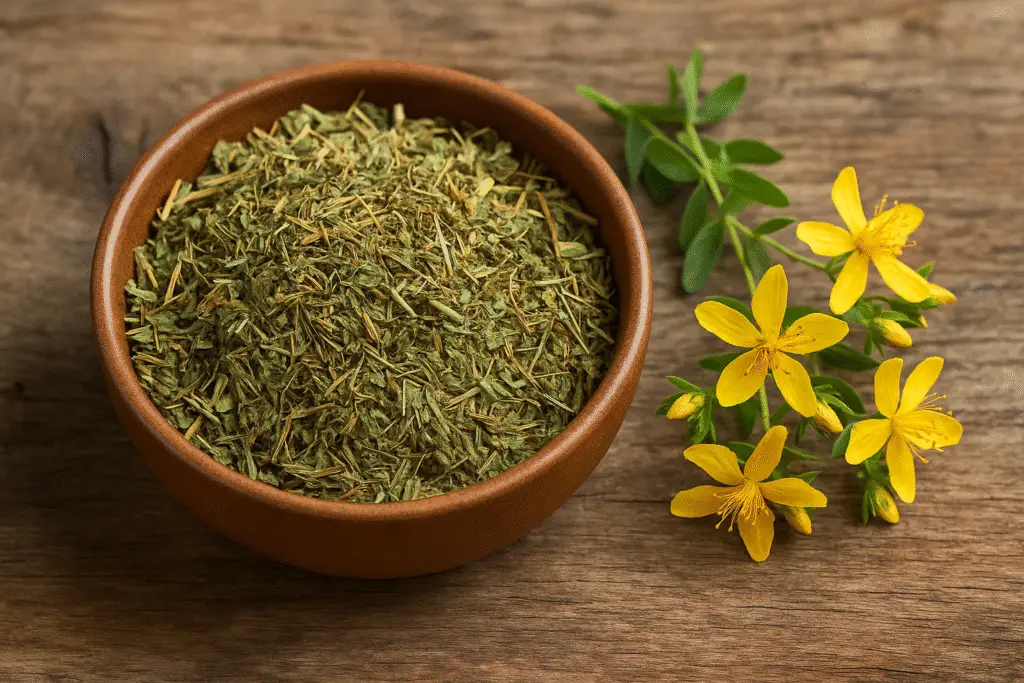
First things first: it’s not some medieval wizardry (although, bonus points if you feel like a forest witch using it). St. John’s Wort is a flowering herb native to Europe and parts of Asia and North Africa. It blooms around St. John the Baptist’s Day in June, hence the name.
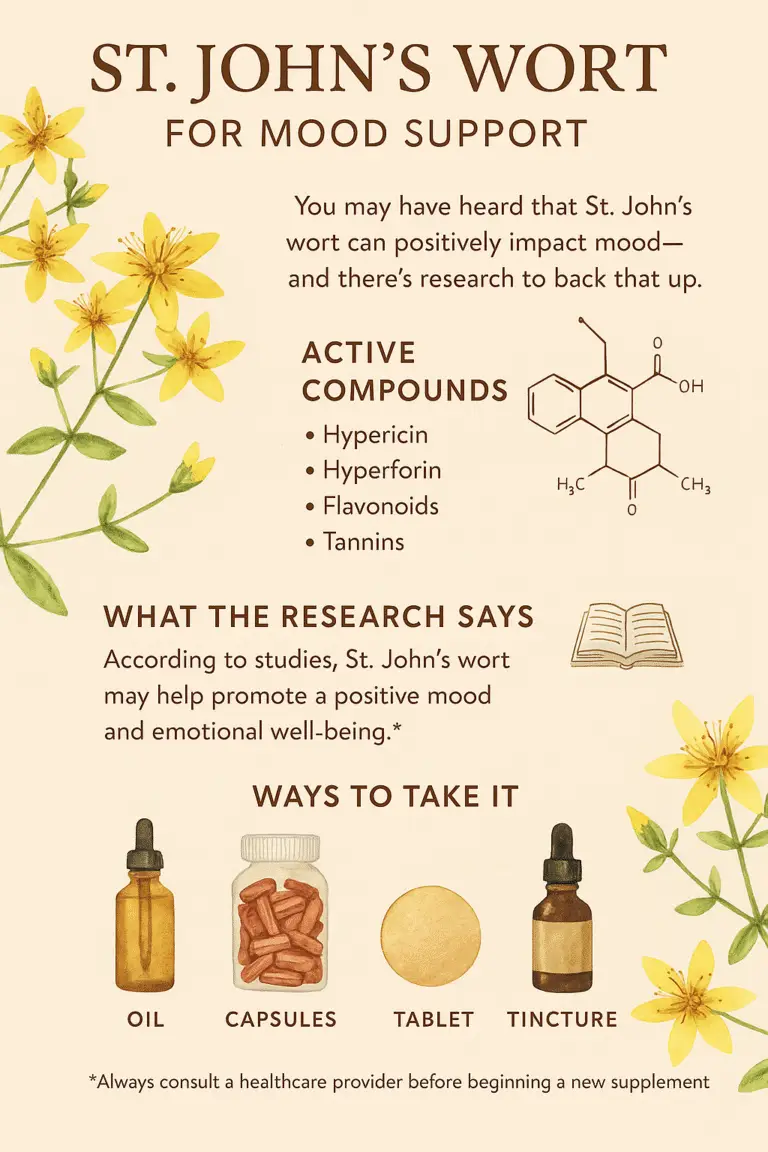
The real magic lies in its active compounds:
-
- Hypericin
-
- Hyperforin
These naturally occurring chemicals are believed to work in a similar way to antidepressants by influencing serotonin, dopamine, and norepinephrine in the brain, the same feel-good neurotransmitters that help regulate our mood.
Okay, But Does It Really Work?
Now for the part your inner skeptic is waiting for (and we love her, we do): What does science actually say?
Let’s just say, this isn’t your average trendy wellness hack.
A 2025 study published in Biomedicine & Pharmacotherapy found that standardized St. John’s Wort extract (STW 3-VI) significantly improved symptoms of mild to moderate depression and also influenced the gut-brain axis—a double win!
(Grafakou et al., 2025 — ScienceDirect)
A Cochrane review of 29 studies with over 5,000 participants found it to be as effective as SSRIs (like Prozac or Zoloft) in treating mild to moderate depression, but with fewer side effects.
(Cochrane Database of Systematic Reviews, 2008)
And a 2025 paper in Current Behavioral Neuroscience Reports notes its relevance for natural treatment pathways in major depressive disorder, especially when paired with enzyme-targeted strategies.
(Singh et al., 2025 — Springer)
Now, is it perfect? Nope. It’s not for severe depression or anyone already taking prescription medications (more on that in a sec). But for folks dealing with mood dips, seasonal blues, or stress fatigue? It could be a literal ray of sunshine.
How to Take St. John’s Wort (Without Feeling Like a Hobbit)
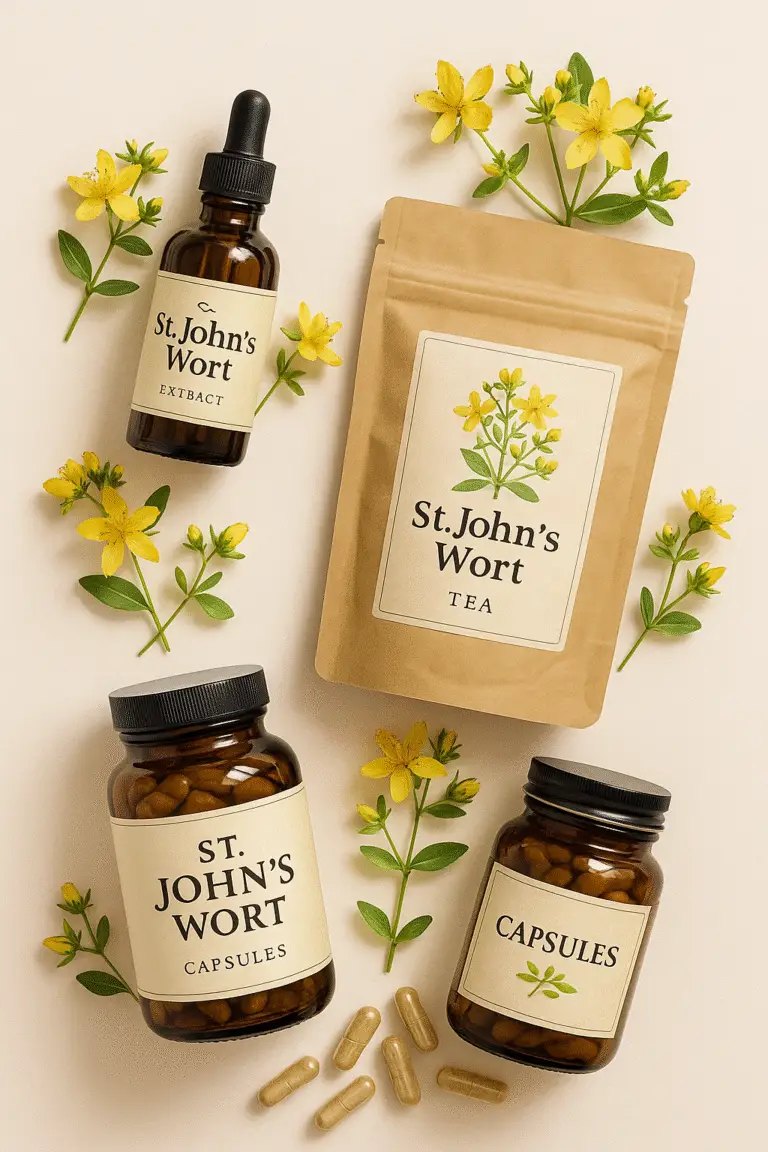
There are a few ways to add this botanical superstar into your wellness routine:
| Form | How It Works | How It Feels |
|---|---|---|
| Tea | Great for gentle use. Steep dried flowers 5–10 min. | Warm, earthy, slightly bitter |
| Tincture | Quick absorption. Drop under tongue or mix with water. | Slightly herbal/strong |
| Capsules | Most convenient. Choose standardized extracts. | No taste, reliable dose |
Most studies use 300 mg standardized extract (0.3% hypericin), taken 2–3 times per day.
Start low and go slow. It can take 2–6 weeks for effects to build.
But Wait—Is It Safe?
Short answer: mostly, yes.
Long answer: only if you’re not taking other meds.
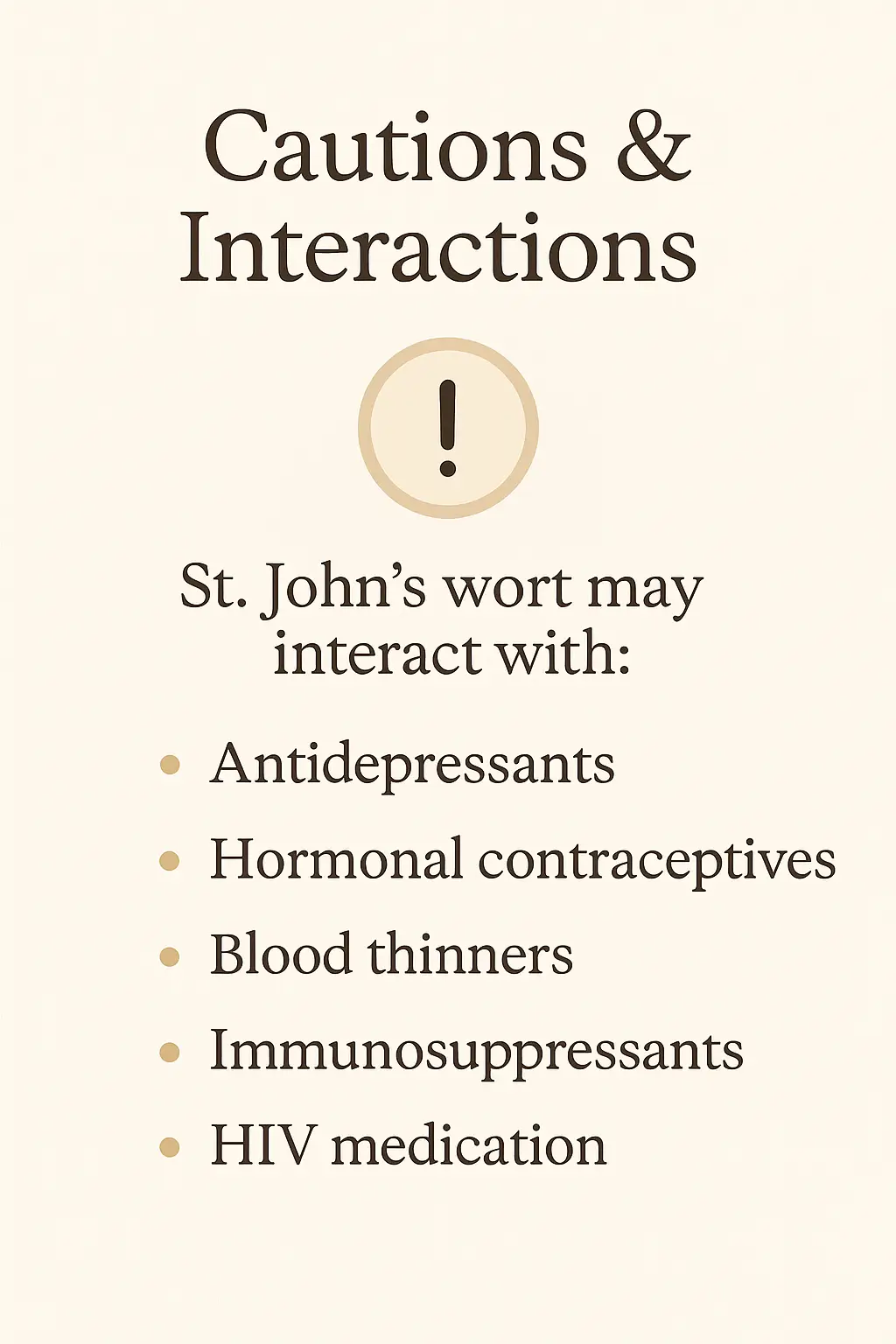
St. John’s Wort is famous for interacting with a loooong list of medications because it speeds up how your liver processes drugs. That means it could weaken the effects of:
-
- Birth control pills (yes, really)
-
- Antidepressants (risk of serotonin syndrome)
-
- Blood thinners
-
- Immunosuppressants
-
- HIV meds
-
- Chemotherapy drugs
So if you’re on anything prescription, it’s non-negotiable to talk to your doctor first.
Also? It can increase sun sensitivity (it’s called “sunshine herb” for a reason), so grab your SPF.
Potential Benefits (That’ll Make You Smile)
Beyond mood support, emerging research is pointing to other possible perks:
Gut health: The gut-brain connection is real, and St. John’s Wort may influence microbiota composition.
Menopause support: Some studies suggest it may ease hot flashes and mood swings.
Wound healing: Used topically in folk medicine for burns, bruises, and nerve pain (though research is limited).
Anxiety & Sleep: Anecdotally reported, especially in combo with valerian or passionflower.
Our Favorite Picks
When shopping, quality really matters. Look for:
-
- Certified organic
-
- Standardized to 0.3% hypericin
-
- 3rd party tested
Here are our top picks (links coming soon!):
-
- Gaia Herbs St. John’s Wort – Liquid caps, organic & well-reviewed.
-
- Nature’s Way Perika – Clinical dose, excellent bioavailability.
-
- Traditional Medicinals Organic Tea – For herbal tea lovers.
- denofgrace
- June 25, 2025
- 4:56 am
- No Comments