
Emotional Freedom Tapping (EFT): A Modern Ritual for Nervous System Regulation & Inner Healing
In a world that rarely slows down, where anxiety and overwhelm are normalized and daily stress becomes background noise, finding effective, accessible healing tools is essential. One such tool is Emotional Freedom Technique, also known as EFT Tapping—a simple but powerful mind-body technique that blends psychology, acupressure, and energy medicine into one therapeutic practice.
Used by wellness practitioners, trauma survivors, mental health coaches, and everyday people seeking relief, EFT is more than a trending technique—it’s a nervous system reset, a trauma-informed ritual, and a portal to emotional clarity.
What Is EFT Tapping?
At its core, EFT is a somatic therapy. It works by tapping with your fingertips on specific meridian points (based on Traditional Chinese Medicine) while simultaneously voicing affirmations or acknowledging emotional tension. This sequence helps calm the amygdala, regulate the nervous system, and release stored emotional trauma.
Think of it as emotional acupuncture without the needles—an intentional practice that helps the body and brain safely reconnect.
The Science: Why EFT Tapping Works
EFT has become increasingly respected in both wellness and clinical spaces. Studies show that tapping on acupoints while engaging in cognitive reprocessing significantly lowers cortisol (the stress hormone), decreases anxiety, improves sleep, and enhances emotional resilience.
- A 2019 study published in Frontiers in Psychology found that a single EFT session reduced cortisol levels by 43%.
- Clinical trials support its use for veterans with PTSD, showing EFT to be as effective as traditional talk therapy—but often faster and gentler.
- MRI studies have observed changes in brain activity during tapping, especially in the limbic system (where trauma and emotional memory live).
When to Use EFT: Real-Life Scenarios
EFT can support you in both high-stress and everyday moments:
- Recurring anxiety or panic attacks
- Overthinking or racing thoughts at night
- Emotional triggers in relationships
- Fear before public speaking or job interviews
- Moments of overwhelm, grief, or insecurity
- Breaking limiting beliefs tied to self-worth or success
You don’t need to wait for a breakdown to use EFT. It’s just as powerful as a daily grounding tool to create emotional spaciousness and regulation.
How EFT Tapping Works: Step-by-Step
Step 1: Identify the emotion or issue
Get specific. For example: “I feel anxious about my finances.” Or: “I feel a knot of tension in my chest about this breakup.”
Step 2: Rate the intensity
On a scale of 0–10, how intense is the emotion right now? This helps track your progress.
Step 3: Set up your statement
Use this format:
“Even though I feel [emotion], I deeply and completely accept myself.”
Example: “Even though I feel unworthy of abundance, I deeply and completely accept myself.”
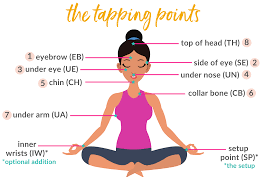
Step 4: Tap through the points
Gently tap each point 7–10 times while repeating your reminder phrase:
- Karate Chop Point: Side of the hand
- Eyebrow: Beginning of the brow, near the bridge of the nose
- Side of Eye: On the bone at the side of the eye
- Under Eye: On the bone below the eye
- Under Nose: Between the nose and upper lip
- Chin Point: Between the lip and chin
- Collarbone: Underneath the collarbone
- Under Arm: About 4 inches below the armpit
- Top of Head: Directly on the crown
Step 5: Pause and reassess
Has the intensity dropped? If not, repeat the sequence with a new phrase or deeper honesty.
The Energetics: More Than Just a Technique
EFT taps into the body’s electrical and energetic systems, clearing blockages and helping us discharge stuck emotions. According to Traditional Chinese Medicine, when energy (or qi) becomes stagnant, we experience imbalance. EFT allows that energy to move again.
It’s a subtle, sacred act of repatterning your nervous system—teaching your body that it is safe, even in discomfort. This is the foundation of healing.
EFT for Deep Nervous System Regulation
When you tap, you’re not just interrupting a thought—you’re re-establishing safety in your body:
- It eases you out of the fight-or-flight response
- It helps activate your rest-and-digest parasympathetic state
- It signals your vagus nerve to regulate and relax
Regular tapping is a neuro-somatic practice, gently bringing your body back to calm even when your mind is overwhelmed.
Common Myths About EFT—Debunked
“It’s just placebo.” EFT has clinical evidence behind it—from cortisol reduction to trauma healing outcomes.
“You have to believe in energy healing.” EFT works whether you believe in qi or not. You can approach it as a science-backed nervous system technique.
“It’s too simple to work.” Some of the most profound healing tools are the simplest. What matters is consistency and presence.
Real Testimonials
“Tapping helped me stop panic attacks. I went from barely being able to leave the house to giving a TEDx Talk.”
– Alina, wellness entrepreneur
“As a therapist, I now integrate tapping into sessions and see deeper breakthroughs than talk therapy alone.”
– Jordan, LCSW
“I used EFT every morning to process grief. It became my safe place to cry and breathe again.”
– Rachel, yoga teacher and widow
Tips to Make Tapping a Daily Ritual
- Start your morning with tapping + affirmations
- Use tapping to process emotional triggers instead of suppressing them
- Tap before sleep to unwind and regulate your nervous system
- Create tapping scripts for common fears or limiting beliefs
Can EFT Replace Therapy?
For some, yes—but it depends. EFT can be deeply healing on its own, but also works beautifully alongside therapy, especially somatic or trauma-informed approaches. If you’re working with a therapist, ask if they’re open to integrating EFT into your sessions.
Where to Learn More
- “The Tapping Solution” by Nick Ortner (book)
- The Tapping Solution App – Guided sessions for sleep, anxiety, abundance & more
- eftuniverse.com – Research and certified practitioners
- ACEP (Association for Comprehensive Energy Psychology) – Professional training
Final Thoughts
Emotional freedom isn’t a destination—it’s a practice. Whether you’re healing from trauma, navigating anxiety, or just craving peace in a loud world, EFT offers a gentle, self-led ritual that reminds your body you are safe, seen, and supported.
And sometimes, that’s all we really need to start again—with breath, with presence, and with trust.